
AI support assistants: where people belong
Choose a focused support task, connect trustworthy knowledge, design the human handover and measure whether the assistant actually helps.
ecomvision editorial team
2 min
Published
Updated
Key takeaways
- 01Start with a narrow task and a known source of truth.
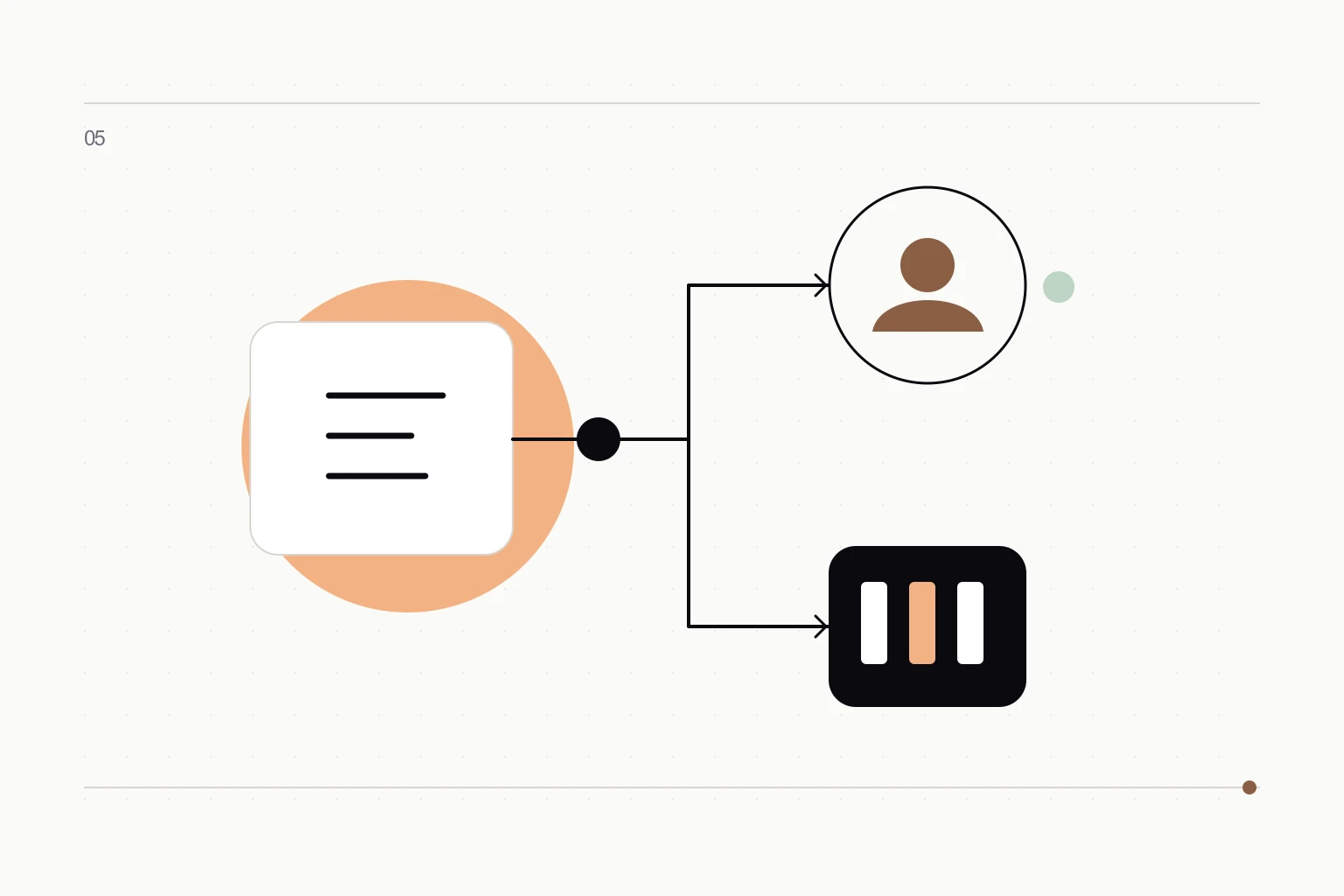
- 02Preserve context when handing a conversation to an operator.
- 03Measure correctness and task completion, not response speed alone.
Choose a bounded first task
Finding instructions, explaining a status or collecting an enquiry are useful starting points. Separate informational answers from actions that change a system. Explaining a refund policy is different from authorising a refund.
Describe supported questions and escalation conditions. Make the assistant’s role and the route to a human clear.
Prepare the knowledge
Instructions need owners, review dates and a clear scope. Connecting a model does not resolve contradictions between documents. Remove duplicates and separate internal notes from customer-facing material.
Retrieve order-specific information from an authorised system instead of inferring it from conversation. A missing source should lead to a clear limitation, not a guessed answer.
Hand over the complete task
Include the question, attempted steps, relevant documents and the unresolved issue. Customers should not have to repeat a conversation.
Provide an obvious human-help action and an honest waiting state. Outside operating hours, offer a real continuation path rather than implying an instant response.
Evaluate representative questions
Build a set of common questions, ambiguous requests and cases the knowledge base cannot answer. Review correctness, source support and escalation after changes.
Automation rate can rise while resolution quality falls. Track task completion, repeat contacts and operator corrections. Confirm that private records remain inaccessible and state-changing actions require appropriate authority.
- Current sources support the answer.
- The conversation cannot expose another user’s records.
- Actions that change data require explicit authority.
- The operator receives enough context to continue.