
Website development timelines: stages and dependencies
Build a realistic launch plan around decisions, design, content, integrations and testing. Understand which tasks can run in parallel and which cannot.
ecomvision editorial team
2 min
Published
Updated
Key takeaways
- 01Plan around dependencies and accepted deliverables.
- 02Assign owners to content, access and decisions.
- 03Reduce launch scope before reducing essential verification.
Define the starting point
A Monday start date does not mean development can begin. Confirm the launch goal, page scope, decision owner, materials and access. If important inputs are unknown, discovery and an agreed plan become the first deliverables.
An estimate should state its assumptions: copy arrives before design approval, a test integration exists and feedback is consolidated. A week count without these conditions suggests precision the project does not have.
Use observable milestones
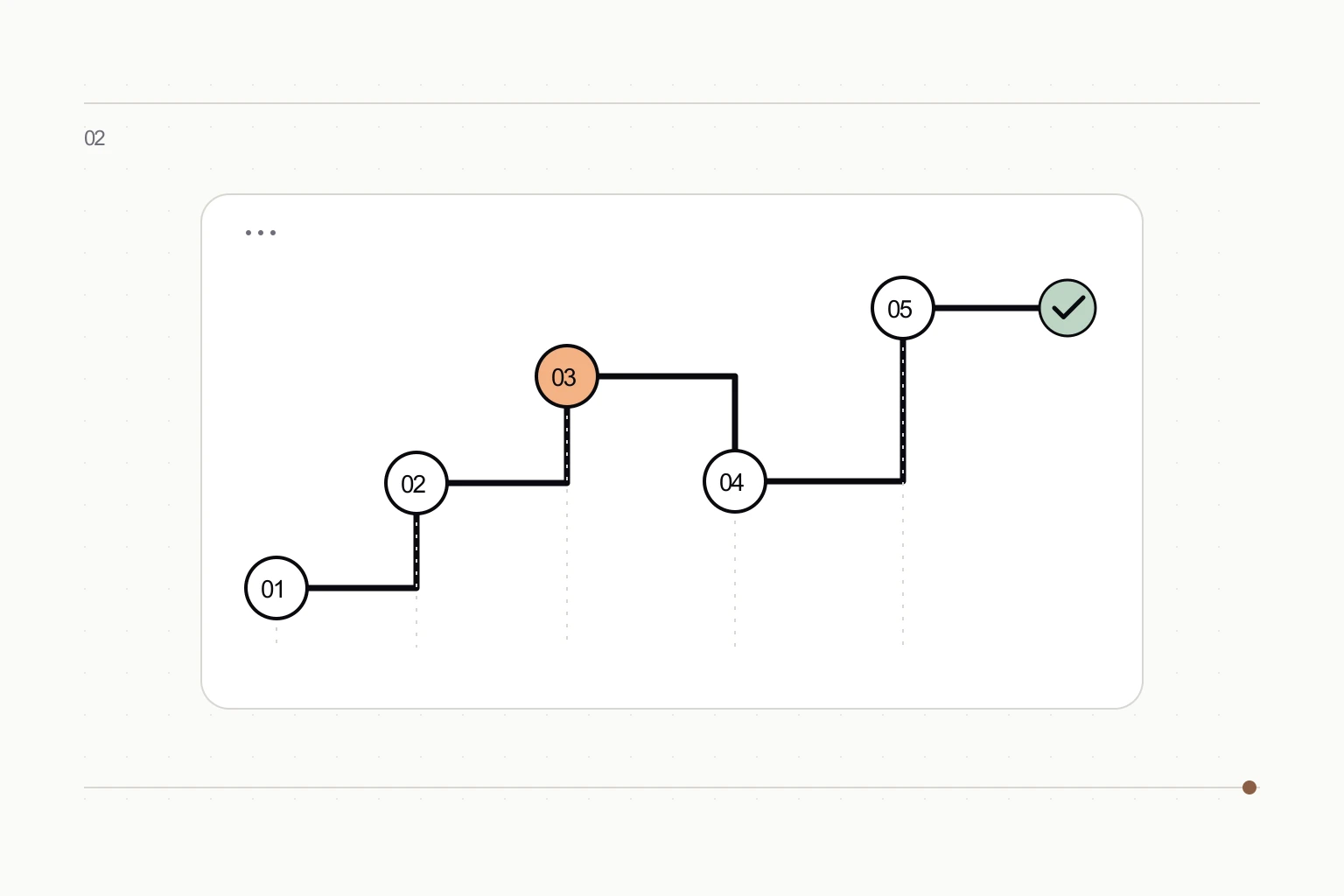
Define an output for each stage: journeys, prototype, visual system, working build and accepted release. Record which decisions are settled and how later changes are handled. Small sites can combine stages; complex portals benefit from frequent demonstrations with realistic data.
- Structure: audience and information needs.
- Design: core templates and states.
- Development: working user journeys.
- Release: checks, ownership and rollback.
Parallelise stable work
Copy preparation, environment setup and API design can run together. Development can begin once core components are approved, while secondary screens continue. This needs stable contracts between teams.
Starting every task against an unsettled structure creates rework. Parallel work is useful when one team is not repeatedly invalidating another team’s output.
Turn blockers into decisions
Delays can originate anywhere: unclear requirements, technical constraints, missing content or slow review. Track the dependency, owner and next decision rather than assigning blame.
“Choose photography, licensed imagery or a launch without this section by Thursday” is more actionable than “waiting for pictures”. A short blocker log makes trade-offs visible.
Separate code completion from launch
Reserve time for forms, real devices, redirects, analytics and handover. External services and domain configuration also affect the switch. With a fixed deadline, agree on the minimum release and deferred work in advance.
Assign someone to watch availability, enquiry delivery and errors after launch. The team needs to know what is ready and how to recover, not simply when development stops.